If the World Is Wrong, Why Is Work Still on Schedule?
Across Minneapolis and greater Minnesota, communities are responding to an unprecedented onslaught of thousands of ICE, Border Patrol, and Homeland Security agents that has led to mass arrests, hundreds injured, and multiple fatal shootings, including of US citizens. It’s beyond appalling, beyond shocking. It’s altering the reality of American citizenship.
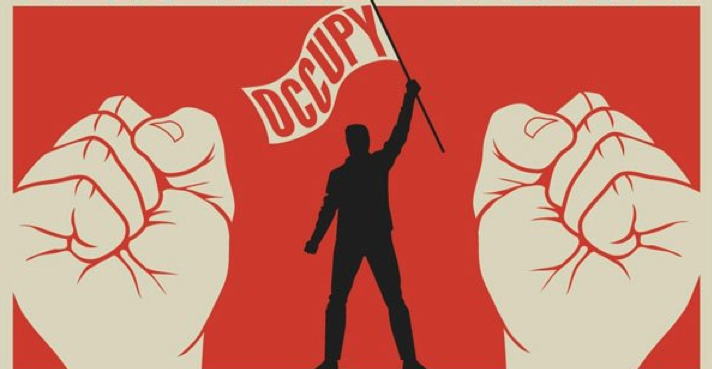
It’s why organizers are calling for a general strike—a collective refusal to carry on as if the ordinary rules still apply—on Friday, January 30th.
I don’t yet know whether this is actually catching on nationally or whether it’s still a constellation of local acts that look bigger online than they feel on the ground. As I write this, there are rumors spreading on social media that the strike itself is an elaborate scheme to capture data. History suggests that general strikes don’t become real until organized labor commits to them in a sustained way. Until that happens elsewhere, this moment is fragile.
But I’m going to participate. And if the idea of the editorial director of a PR firm participating in a general strike makes you roll your eyes, that’s good. It should. We typically think of strikes as belonging to people whose labor is visibly physical or whose absence is immediately measurable—healthcare workers, transit operators, teachers. When white-collar professionals participate, the skepticism is reflexive: Does anyone care if that email goes unanswered? Is this performative? Is this just a day off dressed up as politics?
That discomfort is the point. A general strike isn’t only about halting production; it’s a collective signal that the conditions surrounding our lives—and therefore our work—have crossed a threshold where “business as usual” becomes a moral failure rather than a neutral default.
When armed federal enforcement invades neighborhoods, terrorizes communities, and murders legal observers with impunity, the idea that work can continue untouched is its own kind of statement. A general strike, in that context, isn’t about pretending inboxes run the economy. It’s about withdrawing consent from normalcy when normalcy has lost legitimacy. “Desk-jockey” participation like mine matters inasmuch as it breaks the fiction that economic life is separate from civic life. Corporations don’t float parallel to politics; they are embedded in systems that distribute power, risk, and protection unevenly.
There are many who simply cannot halt their work, for ideological reasons or otherwise, for one day. The ability to step back—and step back without immediate retaliation—is a privilege. And when exercised in solidarity rather than silence, privileges can widen the space for others to act. If companies choose to participate in solidarity, it shouldn’t be because it’s easy. It should be because it’s hard. It should be because neutrality has its own moral weight. Leaving the machinery of business humming while people are shot in public squares and communities are militarized isn’t just “not taking sides”; it’s complicity.
More to the point, when done seriously, participation in a general strike isn’t symbolic fluff, it’s practical. It isn’t time off, it’s time redirected: toward mutual aid, toward civic pressure, toward attention that would otherwise be swallowed by meetings and metrics. I’ll be canvassing with this flyer. I'll be bringing groceries to my local mutual aid organization. I will be attending the march in Foley Square. I will not be spending money. I will be calling my senators.
This post itself is an act of solidarity with community. This post is an invitation to participate, in whatever ways are available to you: don’t buy anything! don’t spend any money! call your senators! donate to immigrant defense funds!
It’s easy to feel like we have no control. Collective refusal reminds us otherwise. We have the power to slow things down, to make harm harder to ignore, to insist that legitimacy matters more than momentum. A general strike asks a simple question: if the world feels wrong, why should it keep running on schedule?
